In today’s interconnected world, celebrities and politicians wield tremendous influence over public opinion, culture, and societal values. Whether through Hollywood, social media, or political campaigns, these figures have the power to shape perceptions and narratives. Yet, this influence often comes with a catch—they are often compensated to endorse particular viewpoints or support specific agendas. Despite this, millions continue to admire and follow them. So, what drives people to look up to such individuals, even when it’s clear that they are paid to push a narrative?
The Power of Influence: Celebrity Endorsements and Political Platforms

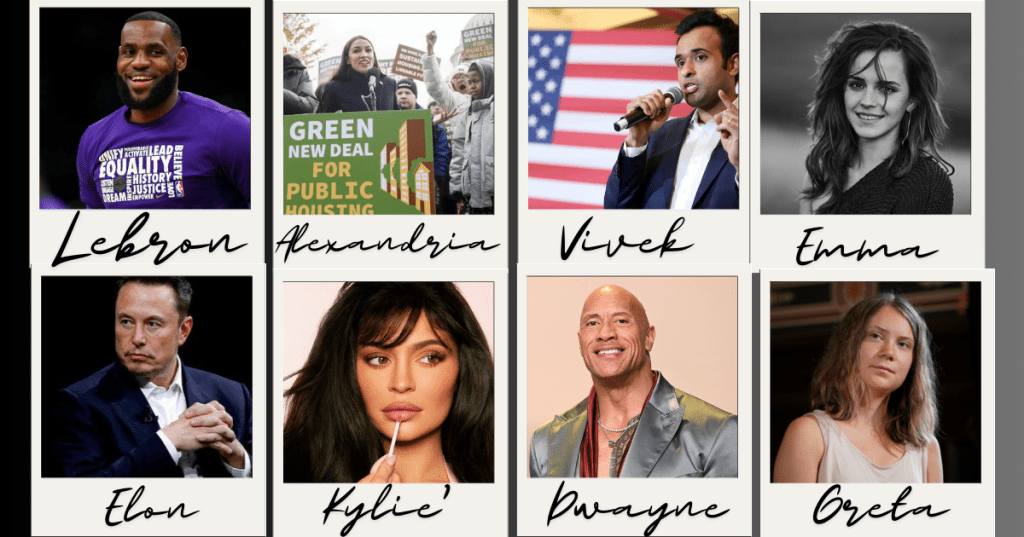
One of the key reasons people look up to celebrities is their ability to captivate audiences and shape behavior. An excellent example is when former NBA star LeBron James used his platform to speak out on social justice issues, such as the Black Lives Matter movement and voting rights during the 2020 U.S. presidential election. LeBron’s influence transcends sports; millions view him as a role model, and when he speaks, people listen. His campaign, “More Than a Vote,” sought to combat voter suppression, partnering with various organizations to encourage marginalized communities to vote. His celebrity status allowed him to bring attention to issues that were often ignored in mainstream discussions, making him not just an athlete, but a voice of a generation.
Similarly, in the political sphere, Alexandria Ocasio-Cortez (AOC) has become an icon of progressive movements. Known for her social media presence and direct engagement with younger audiences, AOC uses platforms like Instagram and Twitter to advocate for climate action, economic justice, and healthcare reform. During the COVID-19 pandemic, she used her platform to debunk misinformation and promote social safety nets, which resonated deeply with her followers. By blending traditional political rhetoric with social media savviness, AOC influences not just policy debates but also how younger generations engage with politics.
The Attraction of Lifestyle and Status

Another reason people admire celebrities is because of their seemingly glamorous lifestyles. This is particularly evident with figures like Kylie Jenner, who has leveraged her fame to build a billion-dollar cosmetics empire. Despite facing criticism for coming from an already wealthy background, Kylie’s story is sold as one of entrepreneurial success. She uses her influence to promote beauty standards, which, in turn, encourages followers to purchase products that she endorses. Whether her promotions are driven by genuine enthusiasm or commercial interest, people continue to look up to her as an aspirational figure.
Similarly, the 2024 presidential election has brought out figures who are leveraging lifestyle and status to gain political traction. Tech entrepreneur Vivek Ramaswamy, for example, has positioned himself as a political outsider fighting against “woke culture” in corporate America. His appearances on talk shows and social media channels often focus on his success as a self-made millionaire and author, resonating with voters who are attracted to the idea of someone who has achieved wealth and status without following the conventional political path.
The Appeal of Authority and Expertise
Celebrities and politicians are often seen as authorities in their respective fields, which lends them credibility, whether deserved or not. For example, actress Emma Watson, known for her role as Hermione in the Harry Potter series, has become a prominent advocate for gender equality through her work with the United Nations’ HeForShe campaign. Her fame and perceived authority as a well-educated celebrity make people take her opinions on social justice seriously, although her expertise in this area is more symbolic than academic. Nevertheless, her endorsements of gender equality campaigns reach millions, shaping public perception.
In the political realm, tech moguls like Elon Musk have become influential in policy discussions surrounding technology and space exploration. While he isn’t a politician, his influence on matters like artificial intelligence regulation and climate action is significant. When Musk tweeted about cryptocurrency or announced his political leanings, markets reacted, and his endorsements were taken seriously by millions of his followers—even if these statements were controversial or self-serving.
The Role of Repetition and Familiarity
There’s also a psychological factor at play. People are likelier to trust and look up to figures they see and hear from frequently. This tactic has been effectively used by figures like Dwayne “The Rock” Johnson. Known initially as a wrestling star and then a blockbuster actor, The Rock has parlayed his familiarity into political commentary, speaking out on issues ranging from the COVID-19 pandemic to voting rights. His transition from entertainment to social issues, along with his frequent posts and appearances, has built trust and admiration among his followers.
Similarly, in politics, President Joe Biden’s consistent messaging around “building back better” and re-establishing American norms has resonated with many who see him as a steadying force. By repeating messages of unity and stability during times of division, Biden has positioned himself as a figure to look up to, even when critics argue that these messages may be more performative than transformative.
Are They Worth Looking Up To?
The public’s admiration for celebrities and politicians is multifaceted. On the one hand, their influence can be used to highlight important issues and promote positive change. Figures like Malala Yousafzai and Greta Thunberg have used their celebrity status to champion education and climate action, respectively. On the other hand, we must be mindful that many endorsements, whether for products or policies, are driven by financial incentives, contracts, and affiliations.
Understanding why we look up to these figures is crucial in a world where narratives can be shaped and sold. It’s important to critically evaluate the messages being put forward and discern between genuine advocacy and paid promotion. In the end, celebrities and politicians have significant power in shaping our perceptions, but we must remember that not all influence is rooted in authenticity. As admirers and consumers, we must strive to look beyond the surface and question the narratives presented to us.
Discover more from DominoZee
Subscribe to get the latest posts sent to your email.

 DominoZee